
Best Studio Monitors for Bedroom Producers in 2026
Find the perfect studio monitors for your bedroom studio. Compare top monitors including KRK Rokit, Yamaha HS series, and Adam Audio for accurate mixing and production.

Your headphones sound great. Your mix sounds incredible. Then you play it in your car and it's a muddy, bass-heavy mess. Sound familiar? This is the bedroom producer's curse, and the solution is a good pair of studio monitors.
But here's the problem: walk into any music store and you'll be bombarded with dozens of options, each claiming to be the "industry standard" or offering "crystal-clear accuracy." The truth is simpler - you need monitors that translate well, fit your space, and match your budget.
In this guide, we're cutting through the noise and focusing on three proven studio monitors that actually work for bedroom producers. No endless comparisons, no analysis paralysis. Just three solid choices at different price points that thousands of successful producers use every day.
Why You Can't Mix on Headphones Alone
Can you mix entirely on headphones? Technically, yes. Should you? Absolutely not if you want mixes that translate to real-world playback systems.
Headphones create an artificial stereo field that doesn't exist in nature. The left channel goes only to your left ear, the right only to your right. In the real world, both ears hear both speakers with complex phase interactions and room reflections.
This creates two major problems: stereo imaging becomes exaggerated (things sound wider than they really are), and bass response is highly dependent on the seal around your ears. Move your head slightly and the low end changes dramatically.
Studio monitors let you hear what's actually happening in your mix. They reveal room interaction, show you how sounds behave in a natural stereo field, and give you the physical bass response that you can feel in your chest. That's information you need when making mixing decisions.
What Makes a Good Studio Monitor for Bedroom Production
Before we dive into specific recommendations, you need to understand what actually matters when choosing monitors for a small, untreated space.
Size Matters More Than You Think
Bigger isn't always better for bedroom studios. A monitor with an 8-inch woofer might seem impressive, but in a 10x12 foot bedroom, it'll excite room modes and give you bass problems that no acoustic treatment can fully solve.
For most bedroom producers, 5-inch woofers are the sweet spot. They provide enough low-end information to make mixing decisions while remaining controllable in small spaces. Some producers go with 7-inch if they have decent treatment and a larger room.
Frequency Response Reality Check
Every monitor manufacturer claims their frequency response extends down to 40Hz or lower. In practice, that specification is often measured at -10dB, which means the bass is already rolling off significantly.
What matters more is how flat and consistent the response is in the range where you actually mix (80Hz-12kHz). A monitor that extends to 35Hz but has a bumpy response through the mids is worse than one that rolls off at 50Hz but stays flat through the critical midrange.
The Room Treatment Question
Here's an uncomfortable truth: the best studio monitors in an untreated room will sound worse than average monitors with proper acoustic treatment. Your room is part of the monitoring system.
That said, you don't need thousands of dollars in treatment to get started. Strategic placement of absorption panels at first reflection points and bass traps in corners makes a massive difference. Budget $200-300 for basic treatment when you buy monitors.
The Three Best Studio Monitors for Bedroom Producers
Budget Champion: KRK Rokit 5 G4 ($180-200 per pair)
The KRK Rokit 5 G4 has become synonymous with bedroom production for good reason. At around $180-200 for a pair, these monitors punch far above their price class and have been used on countless hit records.
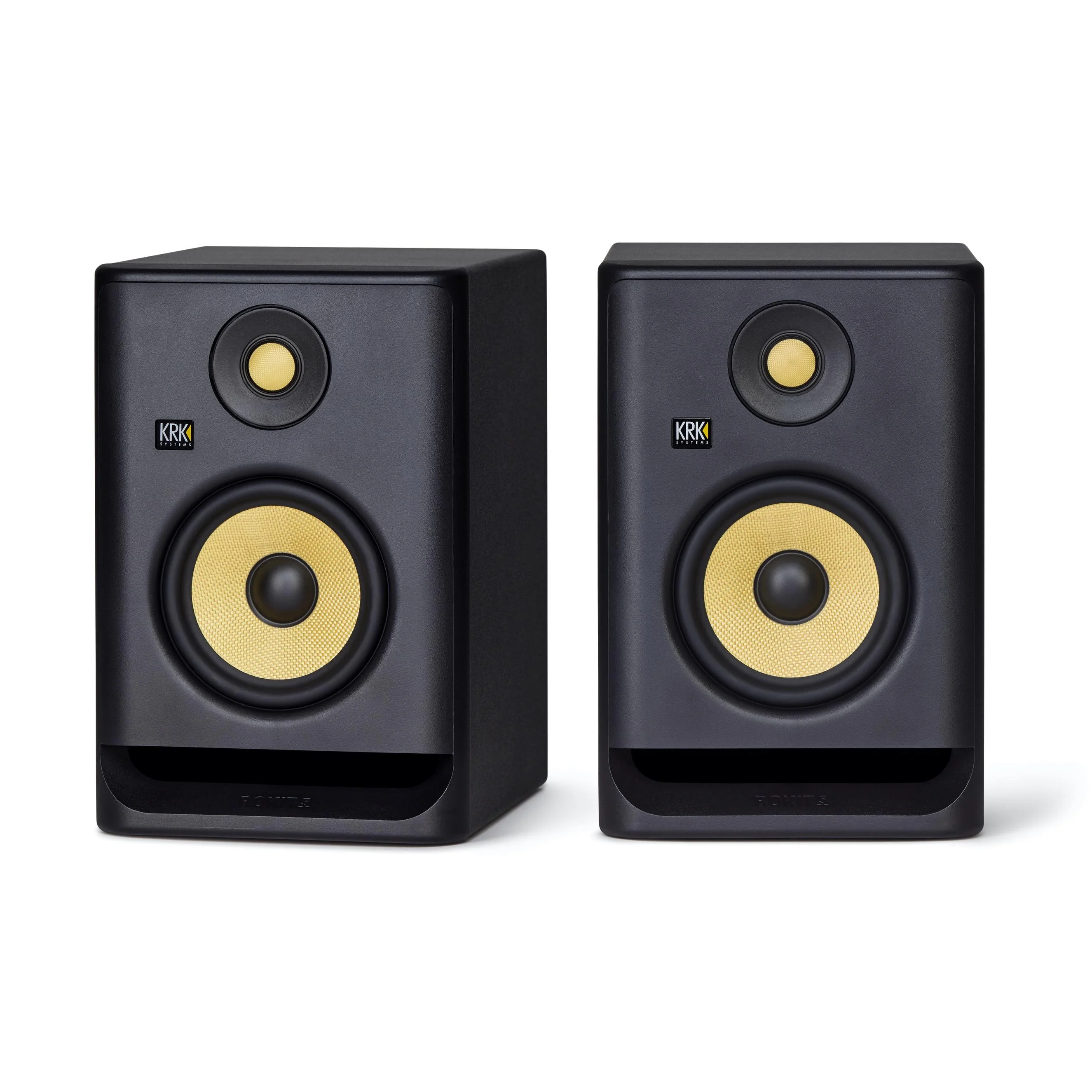
The 5-inch Kevlar woofer delivers surprisingly deep bass response for the size, extending down to 43Hz. The signature yellow cone makes them instantly recognizable, but the real story is what's inside - a newly designed waveguide that improves imaging and reduces distortion compared to previous generations.
What sets the G4 generation apart is the built-in DSP room correction. Using the included measurement microphone and mobile app, you can measure your room's response and apply corrective EQ curves. It's not perfect, but it helps tame some room issues without spending thousands on treatment.
The sound signature has a slight low-end bump that makes them forgiving for bedroom producers who might be light on bass traps. Some mix engineers argue this "flatters" the sound too much, but for learning and getting 80% there, they're fantastic.
Best for: Beginners to intermediate producers, hip-hop and electronic music, anyone on a tight budget who wants room correction features
Where they fall short: Slight bass emphasis means you need to reference on other systems, not as detailed in the highs as pricier options
Real-world advice: Position these at least 6-8 inches from walls and angle them toward your listening position. Use the room correction app even if you have treatment - it makes a noticeable difference. If your mixes sound bass-light on the Rokits, they're probably right. If they sound perfect, check on headphones because you might be overcompensating.
The Industry Standard: Yamaha HS5 ($220-240 per pair)
Walk into professional studios around the world and you'll see Yamaha monitors. The HS5 continues the legendary NS-10 lineage with a modern design that's become the reference standard for bedroom producers.
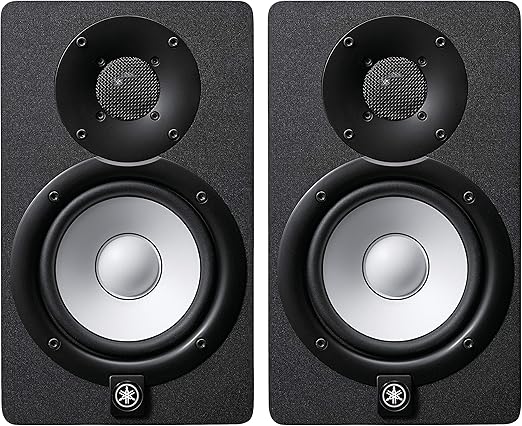
These monitors are brutally honest. The flat frequency response doesn't flatter your mixes - if something sounds harsh, it's harsh. If the low end is muddy, you'll hear it immediately. This honesty is exactly what you need to make mixes that translate everywhere.
The 5-inch cone woofer with white coating looks distinctive but serves a sonic purpose - the material provides optimal damping characteristics for clear, accurate midrange. The room control and high trim switches on the back let you adjust for different placement situations without DSP complexity.
The HS5's weakness is also its strength: they don't extend as low as the Rokits (54Hz vs 43Hz). This forces you to focus on the midrange where most mixing decisions happen. You'll need to check bass on a subwoofer or headphones, but your mids and highs will translate beautifully.
Best for: Producers who want industry-standard reference, mixing engineers, anyone working in multiple genres, those who value honesty over flattery
Where they fall short: Limited low-end extension means checking bass elsewhere, unforgiving sound can be discouraging for beginners
The HS5 mixing philosophy: These monitors teach you to mix with your brain, not your ears. If your mix sounds good on HS5s, it'll sound good everywhere. The limited bass response is a feature - it prevents you from over-treating the low end and keeps you focused on the 200Hz-5kHz range where vocals and most instruments live. Mix on these, then check your bass on headphones or a car system.
Premium Choice: Adam Audio T5V ($280-320 per pair)
When you're ready to step up, the Adam Audio T5V delivers professional-level accuracy with the famous U-ART accelerated ribbon tweeter that's appeared on Adam monitors for decades.
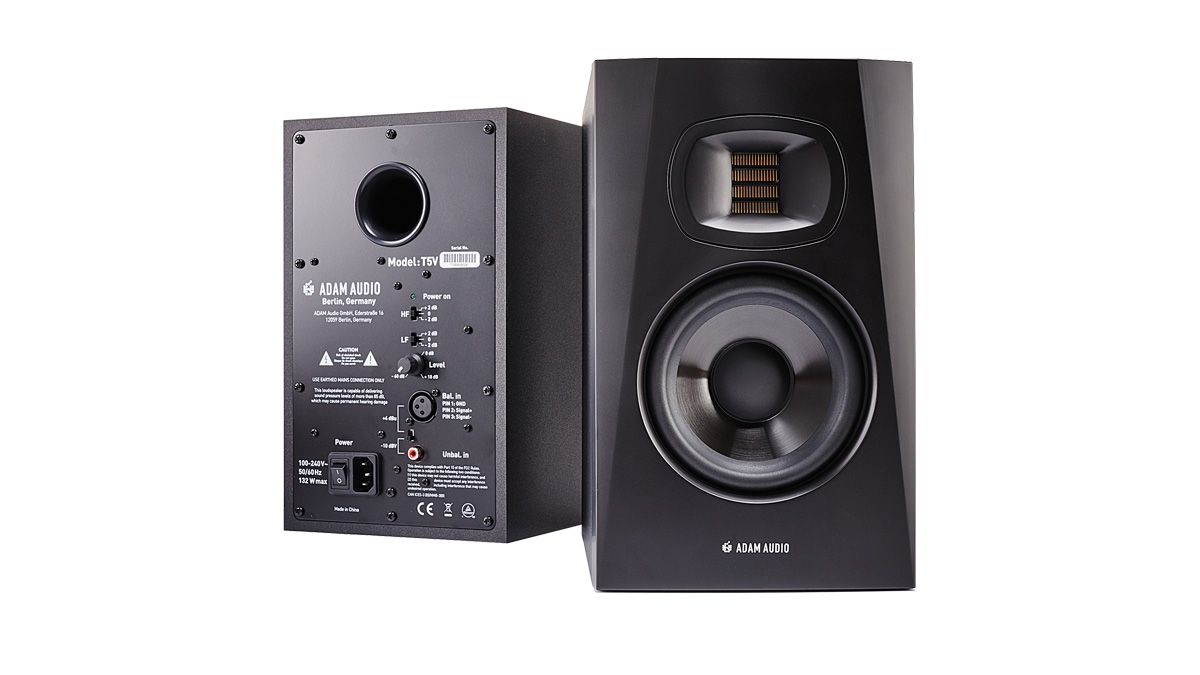
The ribbon tweeter extends to 25kHz with incredibly low distortion, revealing detail in the high frequencies that dome tweeters simply can't reproduce. This means you can hear exactly what's happening with cymbals, vocal air, and reverb tails - critical information for polish and professional-sounding mixes.
The 5-inch woofer uses a High Frequency Propagation (HFP) waveguide that improves stereo imaging and creates a larger sweet spot. You can move your head slightly without the mix collapsing, which matters during long mix sessions when you're not perfectly centered.
Bass response extends to 45Hz with a rear-ported design that provides more depth than the sealed Yamaha HS5. The sound is balanced and detailed across the spectrum - not as flattering as KRKs, not as clinical as Yamahas, but incredibly revealing in a musical way.
Best for: Intermediate to advanced producers, anyone mixing intricate arrangements, genres requiring detailed high-frequency work (acoustic, jazz, classical), long-term investment
Where they fall short: Most expensive option, rear port requires more careful placement away from walls, might reveal flaws beginners aren't ready to fix
Investment perspective: The T5Vs cost 50% more than HS5s and 75% more than Rokits. Is the difference worth it? If you're serious about mixing and plan to use these monitors for 5+ years, absolutely. The ribbon tweeter alone provides insight that will improve your mixes faster. But if you're just starting out, the extra detail might be overwhelming - like learning photography on a $5000 camera when a $500 one would teach you more effectively.
Quick Recommendation Guide
Best for Beginners: KRK Rokit 5 G4 ($180-200 per pair) - Forgiving sound, built-in room correction, great value
Best Industry Standard: Yamaha HS5 ($220-240 per pair) - Brutally honest, legendary accuracy, proven track record
Best Premium Investment: Adam Audio T5V ($280-320 per pair) - Ribbon tweeter detail, professional accuracy, long-term quality
The biggest secret to better mixes? Stop obsessing over gear.
You don't need the most expensive monitors to make professional music. Every single monitor recommended here has been used on hit records. The difference between them matters less than learning to actually use them.
Pick the one that fits your budget, set them up properly, learn their sound by referencing commercial tracks, and then forget about gear. Your monitors are a tool for revealing truth, not creating magic. The magic happens between your ears, in your creativity and decision-making.
Buy monitors. Learn them. Make music. Everything else is just expensive procrastination.